Rely: research that helps a sales conversation
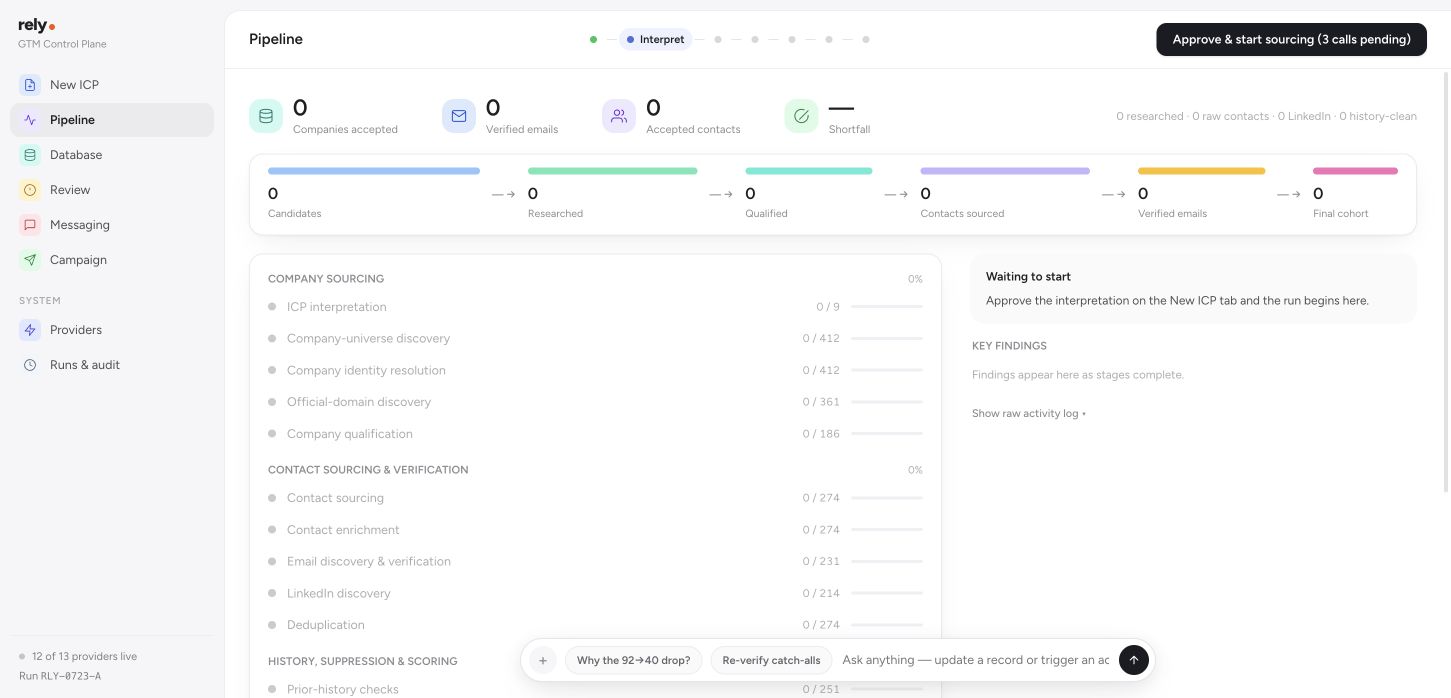
Rely needed a way to find prospective customers beyond warm introductions. I built a conversational research workflow around how account executives actually evaluated companies, with research saved to HubSpot.
The problem and my role
As a GTM & Product Intern, my goal was to help create qualified sales conversations and hand them to account executives to close. Researching more companies only helped if the team could understand why each one was worth approaching.
I mapped the flow: what information mattered, where to find it, and what a company needed to satisfy before reaching an account executive.
Build around the team's workflow
I spoke with vendors selling comparable tools before choosing to build in-house. I had access to Rely's company context and worked directly with account executives to understand how they researched and qualified prospects.
Those conversations shaped a conversational interface connected to HubSpot, so findings could stay with the customer record. The goal was to make the research useful in the team's next sales conversation.
Use AI where context matters
AI was useful for working through different sources with context about Rely. I separated that interpretation from checks that needed clear evidence or consistent rules.
The design included checking quoted claims against source text instead of relying on a model's own confidence score. Research, qualification, and messaging review were separate steps, with people reviewing what would reach a prospect. These are design choices, rather than proof that every integration ran in production.
Results and what I learned
My work covered 10,000+ accounts researched and 1,510+ high-fit leads surfaced. Across the internship, I contributed to seven opportunities representing $363,000 in recorded pipeline. These were potential deals, not closed revenue, and the result reflects work with the sales team as well as the software.
The work made me more deliberate about the context I give AI and what happens to its output. A useful finding needs a source, a reason it matters, and a place in someone's existing workflow.
View image